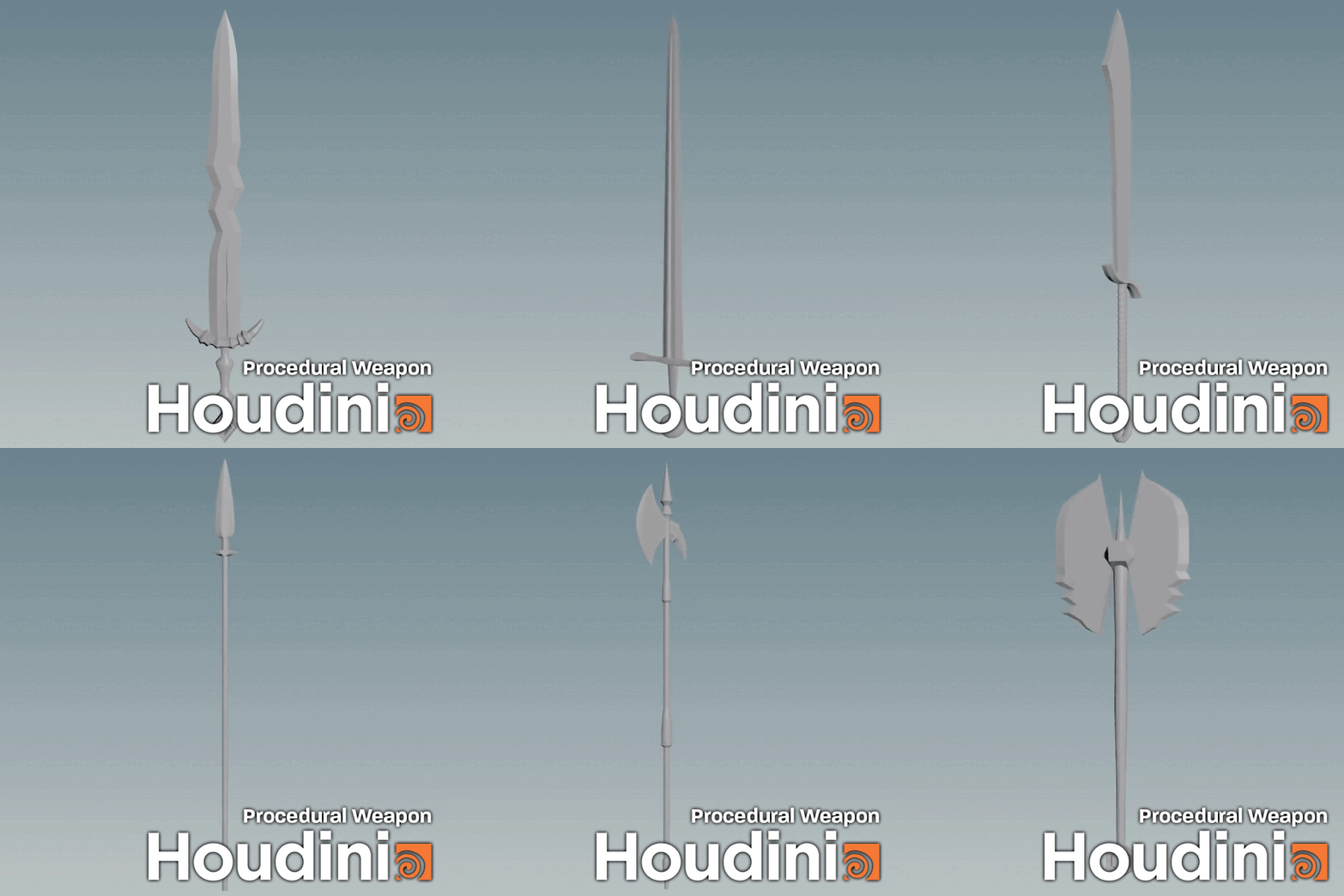
Houdini Weapon Generator

Concept and Research
The project began with a clear vision: to create a versatile weapon generator in Houdini capable of producing an array of melee weapons. I started by analyzing various weapon designs, identifying common components across daggers, swords, spears, and even double-headed axes. This initial research phase was crucial—it provided a foundation for understanding which elements were essential and how they could be recombined in creative ways.
Parameterization and Ramp Settings
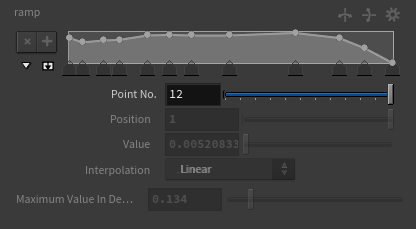
With the concept in place, the next step was to define a flexible system using Houdini’s ramp settings. By adjusting these ramps, I was able to control the curvature, length, and overall profile of the weapon components. This approach allowed for smooth transitions between different design variations, giving the generator the ability to fine-tune shapes and proportions seamlessly.
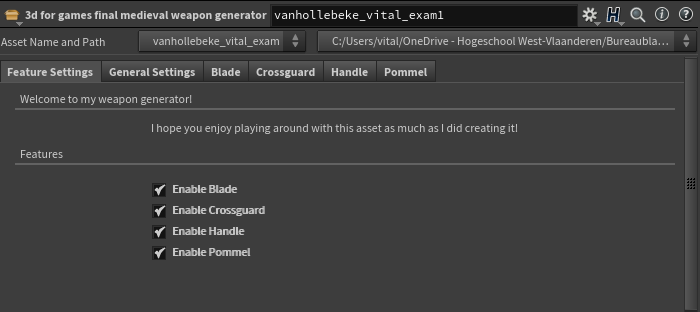
Feature Settings and Modular Design
Building on the parameterization, I implemented a modular design framework that lets you enable or disable specific weapon features. With toggle options for components like the blade, crossguard, handle, and pommel, each part could be individually manipulated or omitted. This modularity is key to achieving such a diverse range of outputs, as it permits the creation of both traditional and unconventional weapon forms with minimal changes.
Result
The culmination of these efforts is an animated showcase of the weapon generator in action. The final result is captured in a dynamic gif that demonstrates the fluid transition from one weapon type to another. Whether generating a dagger, sword, spear, or double-headed axe, the animation underscores the effectiveness of the procedural design approach and highlights the endless creative possibilities offered by the system.